The purchase price is the easy number. It is the annual one that separates owners who enjoy their boats from owners who resent them, because a boat costs money every month whether it touches water or not.
Atlantic Suzuki services boats, fits outboards and handles certificates of fitness for Cape Town owners, so we see what ownership actually costs across a season. Here is the honest breakdown, and where you can reasonably save without putting your engine or your safety at risk.
The annual cost categories
Every boat owner pays for the same six things: insurance, storage, servicing, fuel, compliance, and consumables. The amounts change with hull size and how often you launch, but none of the categories disappear.
The trap is that four of them are annual or seasonal, so they arrive as a lump rather than a monthly reminder. Owners who budget for them monthly cope far better when the Certificate of Fitness, the insurance premium and the pre-season service all land in the same month.
Insurance
Marine insurance is not one product with one price. The premium depends on the hull value, the motor, where the boat is kept, the skipper’s qualifications, and the safety equipment on board.
Agreed value versus market value. An agreed value policy pays out a figure you and the insurer settle up front, which suits owners of boats with recent electronics or a new motor. A market value policy pays what the boat is worth at the time of the claim, which is simpler but can leave you short if you have spent money on the boat since purchase.
Hull and motor separately. A tired hull with a brand new four-stroke is worth insuring carefully. Make sure the motor is properly valued, because replacing an outboard is often the largest single cost after an incident.
Where the boat lives. A boat on a trailer behind a locked gate at home is a different risk to one on a mooring in an open bay. Expect the premium to reflect that.
Safety equipment and qualifications. A working radio, the right life jackets and a current skipper’s licence all help at claim time. Insurers ask about them for a reason, and a claim can be complicated by an expired Certificate of Fitness.
Salt water and theft. Cape Town owners should check what the policy says about corrosion, trailer theft and gear stolen off the boat. Those are the claims that actually happen here.
Storage and mooring
Where the boat sleeps is the second-biggest recurring cost and the one with the most variation.
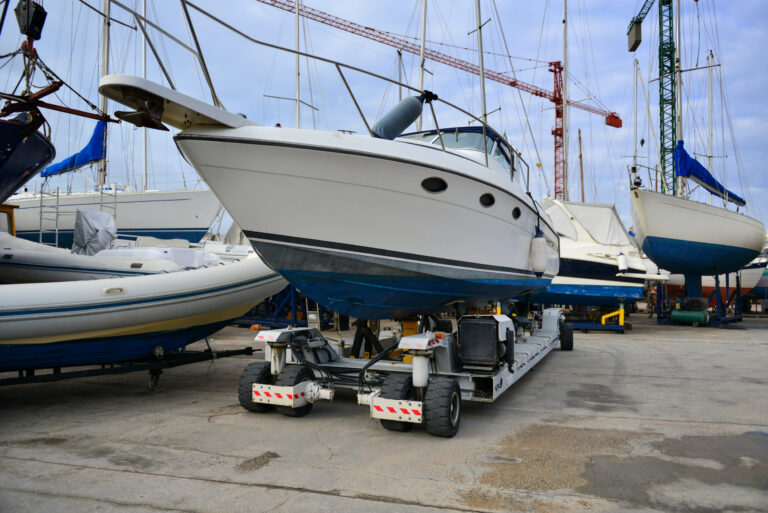
On its trailer at home. Cheapest option, provided you have the space and the neighbours do not object. It also keeps you close to the boat, which is why home-stored boats get used more.
A storage yard. You pay for secure space and often for the convenience of a yard that can move the boat for you. Access hours and security matter as much as price.
A marina berth or mooring. The most convenient and the most expensive. A berth at a harbour gives you quick access and saves towing time, but the boat sits in salt water continuously, which means anti-fouling, anode replacement and a stricter wash-down routine.
Trailer owners should remember that storage is not free of maintenance. A trailer parked in Cape Town’s coastal air will rust, and bearings, brakes and lights need attention every season whether the boat moves or not.
Servicing and spares
Servicing is the cost that protects every other cost. A four-stroke outboard needs its first service at around 20 hours, then a service every 100 hours or annually, whichever comes first.
On top of the routine service, budget for the parts that wear on their own schedule: the water pump impeller and thermostats, anodes, fuel filters, spark plugs, and lower unit oil. Steering and throttle cables, trim and tilt components, and electrical connections all degrade in salt air too.
Skipping a service saves money once and costs money repeatedly. A neglected impeller leads to an overheat, an overheat leads to a head rebuild, and a rebuild costs many times what the missed service would have.
Fuel
Fuel is the cost that scales with how much you use the boat, and it is where four-stroke ownership pays for itself. A modern four-stroke burns noticeably less than an equivalent two-stroke, and it does so across the whole rev range.
Engine hours are a better budgeting tool than trips. A day of inshore fishing inside False Bay burns far less than a run to the Cape Canyon and back, because offshore work means sustained throttle over long distances with a heavy, loaded hull.
Fuel quality is part of the cost. Water in the fuel is the most common reason a boat refuses to start at the ramp, and a water separating filter plus a full tank between trips prevents it.
Compliance: Certificate of Fitness and safety equipment
Any boat used at sea in South Africa needs an annual Certificate of Fitness, and the safety equipment list that supports it is not a one-time purchase.
Flares expire. Life jackets degrade, get lost, and need to match the number of people on board. Fire extinguishers have service dates. First aid kits run out. Anchors, ropes and radios fail. Compliance is an annual line item, not a startup cost, and the correct equipment list depends on the category of water you operate in.
Before you buy a hull, confirm it can pass a Certificate of Fitness. A cheap boat that cannot be made compliant is not cheap.
Consumables and the smaller leaks
The small items add up: cleaning products, anti-fouling for a moored hull, trailer bearings and lights, engine oil, fuel filters, covers and straps, and the fittings that vibrate loose over a season.
Batteries deserve their own line. Load-shedding makes it easy to leave a battery uncharged for days, and a battery that has been deep-cycled a few times will fail when you need it. Charge on a schedule and replace a sagging battery before the season rather than on the morning of a trip.
Depreciation and resale
A boat is not an investment, and the honest way to cost ownership is to include value loss. New boats depreciate fastest in their first years. Pre-owned boats flatten out, and a well-maintained hull with a complete service history holds its value far better than an identical hull with no paperwork.
That is also the cheapest way to protect your resale: keep the service book stamped, flush the motor after every salt water trip, and fix small faults before they grow.
What a year of ownership looks like
| Cost | Frequency | What moves the number |
|---|---|---|
| Insurance | Monthly or annual | Hull and motor value, storage, skipper qualifications |
| Storage or mooring | Monthly | Home trailer versus yard versus harbour berth |
| Servicing and spares | Annual or per 100 hours | Engine hours, model, impeller and anode intervals |
| Fuel | Per trip | Distance, load, hull weight, two-stroke versus four-stroke |
| Certificate of Fitness | Annual | Boat length, category of water, condition |
| Safety equipment | Annual replacement | Expiring flares, life jackets, extinguishers |
| Trailer maintenance | Seasonal | Salt exposure, bearing and brake condition |
| Battery and electrical | Every few seasons | Charging routine, load-shedding, age |
Where to save without regretting it
Some savings are smart and some are expensive. Washing and flushing the boat yourself after every trip costs nothing and prevents corrosion. Storing the boat under cover protects gelcoat, upholstery and electrical connections. Buying the right size boat in the first place is the biggest saving of all, because a boat with too much horsepower costs more to insure, service and fuel for years.
What does not pay is stretching the service intervals, buying cheap fuel or skipping the Certificate of Fitness. Those save small amounts in the short term and produce large invoices later.
Frequently asked questions
How much does boat insurance cost in South Africa?
There is no standard premium. It depends on the value you insure, the motor, where the boat is stored, your skipper qualifications and the safety equipment fitted. Ask for a quote based on your specific hull rather than working from a percentage.
Is it cheaper to keep a boat on a mooring or on a trailer?
A trailer at home is the cheaper option, but a moored boat needs anti-fouling, more frequent anode changes and a stricter wash-down routine. A harbour berth buys convenience and costs more each month.
How often does a boat need to be serviced?
A modern four-stroke needs a first service at around 20 hours, then a service every 100 hours or annually, whichever comes first. Impellers, thermostats and anodes run on their own longer intervals.
Is a Certificate of Fitness required every year?
Yes. Any boat used at sea needs an annual Certificate of Fitness, and the safety equipment that supports it has to be current. Flares, extinguishers and life jackets all carry expiry or condition requirements.
Ownership costs are predictable once you write them down. Insurance, storage, servicing, fuel, compliance and consumables, budgeted monthly, keep a boat affordable and keep it on the water. We handle Certificates of Fitness and outboard fitment alongside servicing, or you can see the full range of services we offer and work out which parts of ownership you want to hand over.