Two buyers walk into the same showroom with the same budget. One wants to tow his kids around Langebaan on a tube and ski the Breede River in December. The other wants to run to the snoek grounds off Millers Point before the south-easter comes through. Both of them are going to look at the same boat and ask whether it can do the job.
Sometimes it can. Often it cannot, and the buyer finds that out on the water. Atlantic Suzuki sells everything from inflatables to offshore cats, so here is the honest version of what separates a ski boat from a fishing boat, and where the compromise hulls actually land.
Start with your average weekend, not your best one
The honest question is not “what would I do with a boat in a perfect summer?” It is “what will I do with this boat twenty times a year?”
If three-quarters of your trips are family days on flat water with a ski or a tube behind the boat, you are shopping for a ski boat. If most of your trips involve rods, bait, an early launch and a run out of the bay, you are shopping for a fishing boat. Buyers who are honest about that ratio end up happy. Buyers who buy for the trip they take twice a year end up selling within two seasons.
What a ski boat does well
A tow-sports boat is built around a hole shot. It needs to plane quickly with a skier or tube behind it, hold a steady speed at skiing pace, and put out a wake that suits the discipline you are riding. That means generous power for the hull’s length, the right propeller pitch, and a hull that stays predictable when a load shifts behind it.
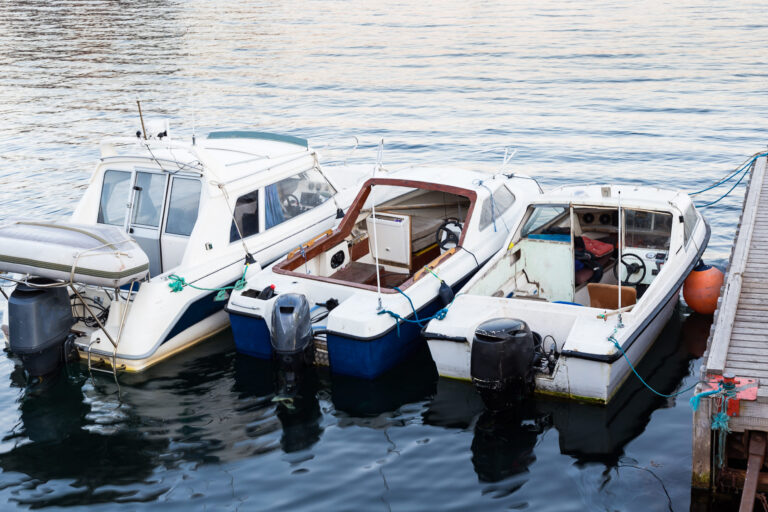
Layout follows the job. Bowriders and runabouts carry seating forward and aft, have a flat, protected cockpit, and offer storage for skis, wakeboards and vests rather than tackle. They are comfortable for passengers, easy to launch and trail, and take a modest outboard compared with the offshore classes.
The trade-off is what happens when the water turns. A boat tuned for flat water and quick acceleration is not the hull you want crossing a Cape swell or working a drift in a lumpy sea. Deck space is taken up by seating rather than rod holders and fish boxes, and the hull does not have the deadrise or the weight to keep you comfortable when the chop stands up.
What a fishing boat does well
Fishing hulls are built around open deck space and ride quality. Rod holders, bait wells, fish boxes, gunnel height, grab rails and a working transom matter more than seating. The hull carries more deadrise or, in the case of a catamaran, a twin-hull design that eats short steep chop rather than bouncing off it.
That ride quality is why catamarans dominate the Cape Town inshore market. False Bay builds a short, nasty sea when the wind turns against the swell, and a catamaran handles that far better than a flat-water runabout of the same length. It also gives you deck area that a bowrider spends on seating.
Range and safety equipment follow from the use. A boat that runs offshore needs fuel capacity, a working VHF radio, the safety gear that a Certificate of Fitness requires, and enough power to get home against a building sea. A ski boat rarely needs any of that, and paying for it is money you do not get back if you never leave the bay.
The compromise boats
Most Cape Town families do not buy a pure example of either type. They buy a dual-purpose hull and accept a trade-off in both directions.
A compact runabout in the 4m to 5m class will pull a skier and fish a calm inshore reef, and it tows behind a normal car. A catamaran in the 5m to 5.5m range, like the Cobra Cat 525, gives you the inshore fishing performance and enough deck to take the family out, with a ski pole as a factory option. An inflatable or RIB is the cheapest way to do both, with the least comfort.
The honest limit on a compromise boat is offshore work. A hull that skis beautifully is not the boat to take to the Canyon in a rising swell. If your ambitions run that far, buy for the fishing first and accept that the skiing will happen on the dams.
Where you will actually use the boat
This is where Cape Town geography decides for you.
Skiing and tow sports. Flat, sheltered water is the requirement. Langebaan Lagoon, the Breede River, Theewaterskloof and Clanwilliam are the destinations that make a dam-capable boat worthwhile. Sea skiing happens, but it is a calm-morning activity in Table Bay or in the sheltered corner of False Bay, and it ends the moment the wind gets up.
Inshore fishing. Launch at Millers Point, Kalk Bay or Gordon’s Bay and you are into the False Bay reefs, the snoek grounds when they are on, and the Buffels Bay area. This is catamaran and mid-size monohull territory, and it is the most common kind of fishing boat on Cape trailers.
Offshore fishing. The Cape Canyon and the deep grounds off Cape Point need a longer hull, more horsepower, more fuel and serious safety equipment. Weather windows are narrow, and a boat that cannot handle the run out and back is a liability rather than a toy.
Weather windows. The summer south-easter and the winter north-wester both shut the sea down regularly. A boat that only works in perfect conditions will sit on its trailer for weeks at a time, which is a strong argument for buying for the conditions you actually get.
How the two compare
| Factor | Ski boat | Fishing boat |
|---|---|---|
| Acceleration and plane | Priority: fast hole shot for towing | Adequate, tuned for load and range |
| Deck layout | Seating, storage for skis and vests | Open deck, rod holders, wells and boxes |
| Ride in chop | Flat-water hull, wet in a swell | Deadrise or cat hull, built for short steep sea |
| Best water | Langebaan, Breede River, dams, calm mornings | False Bay, Table Bay, Cape Point, offshore |
| Power needs | High power to weight for tow sports | Torque and range; 90hp upward inshore |
| Kit required | Ski pole, vests, observer, kill switch | Safety equipment, radio, COF, bait and ice |
Power: what skiing demands from an outboard
A ski boat is a power-to-weight problem. The hull has to plane quickly with a person or three behind it, and it has to hold a constant speed while the skier is up. That puts a premium on low-end torque, and it makes propeller choice as important as horsepower. The wrong pitch and the boat either lugs or over-revs.
Modern four-strokes suit this use well. They deliver smooth torque from low revs, they idle quietly while the skier is getting ready, and they burn far less fuel than the old two-strokes over a full day of towing. That fuel saving matters if your average weekend involves a lot of full-throttle passes.
Safety and legal requirements
Sea use brings the paperwork. Any boat used at sea needs an annual Certificate of Fitness, and the skipper needs the appropriate SAMSAM skipper’s licence for the category of water they operate in. Life jackets sized for every person on board are not optional, and the safety equipment list grows as you move further offshore.
Towing adds its own rules to the day. Someone must watch the skier or the tube at all times, which is why an observer is a legal and practical requirement rather than a courtesy. The kill switch lanyard should be attached to the skipper whenever anyone is behind the boat, and agreed hand signals keep the skier and the driver on the same page.
It is worth taking the time to understand those obligations before you buy, because a hull that cannot pass a Certificate of Fitness is not a boat you can use.
Ownership costs behave the same way
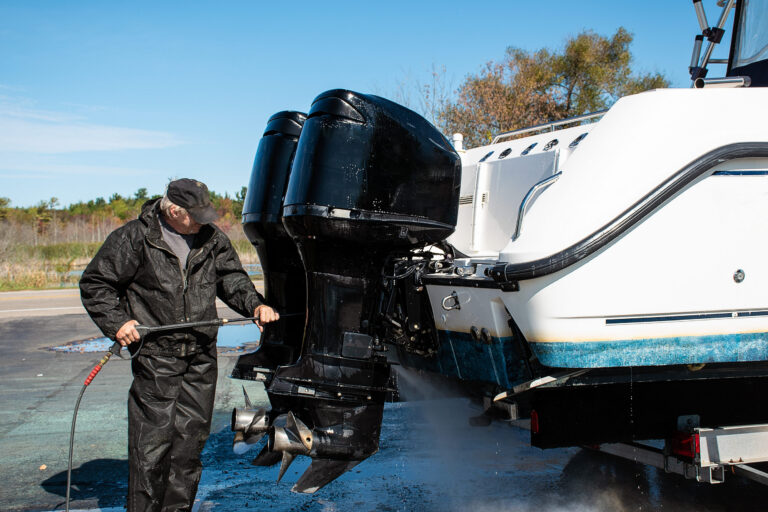
Both boats need the same annual attention: outboard servicing on schedule, gearbox oil and impellers on their intervals, and fresh anodes every season. Salt water is equally unforgiving to a ski boat that gets used in the sea and then parked without a flush.
The difference is use. A fishing boat running offshore burns more fuel per trip, carries more safety equipment to replace, and puts more hours on the motor. A ski boat that lives on dams and lagoons spends less on fuel and far less on corrosion. Budget for the boat you will actually run, not the one in the brochure.
Frequently asked questions
Can one boat do both skiing and fishing?
Yes, within limits. A compact runabout or a small catamaran with a ski pole handles family tow sports and calm inshore fishing. What a compromise hull will not do well is serious offshore work in a Cape swell, because the hull and deck layout are tuned for flat water.
What size outboard does a ski boat need?
Aim for the upper end of the hull’s rated range rather than the minimum. Towing needs a fast plane under load, so a ski boat benefits from power that an equivalent fishing hull could live without. Your hull’s capacity plate gives you the ceiling, and the propeller pitch is what turns that power into the right feel on the water.
Is a ski boat legal at sea in South Africa?
Yes, provided it carries the safety equipment required for the category of water and holds a valid Certificate of Fitness, and the skipper holds the right SAMSAM licence. Check the requirements for the area you plan to use before you buy.
Do I need a four-stroke for skiing?
A four-stroke suits tow sports well. It delivers smooth low-end torque for the hole shot, runs quietly while the skier is preparing, and uses noticeably less fuel across a full day of towing.
Once you know whether your weekends belong on the lagoon or in the bay, the choice narrows quickly. Browse our pre-owned boats if you want to get on the water this season, or shop our new boat range to see which hulls can be ordered and specified for skiing, fishing, or both.
On this page
- Start with your average weekend, not your best one
- What a ski boat does well
- What a fishing boat does well
- The compromise boats
- Where you will actually use the boat
- How the two compare
- Power: what skiing demands from an outboard
- Safety and legal requirements
- Ownership costs behave the same way
- Frequently asked questions