

Choosing the right motor is the most critical engineering decision for any boat owner in the Western Cape. Whether you’re running a small inflatable or a large offshore vessel, the debate between 2-stroke and 4-stroke performance is evolving as fuel costs and environmental regulations shift in 2026.
At Atlantic Suzuki, we understand that “price” isn’t just the number on the sticker, it is the Total Cost of Ownership (TCO) over the life of your boat. This guide breaks down the engineering, the economics, and the specific Suzuki models that dominate the Cape Town waters.
1. The Engineering Shift: Why 4-Stroke is the 2026 Gold Standard
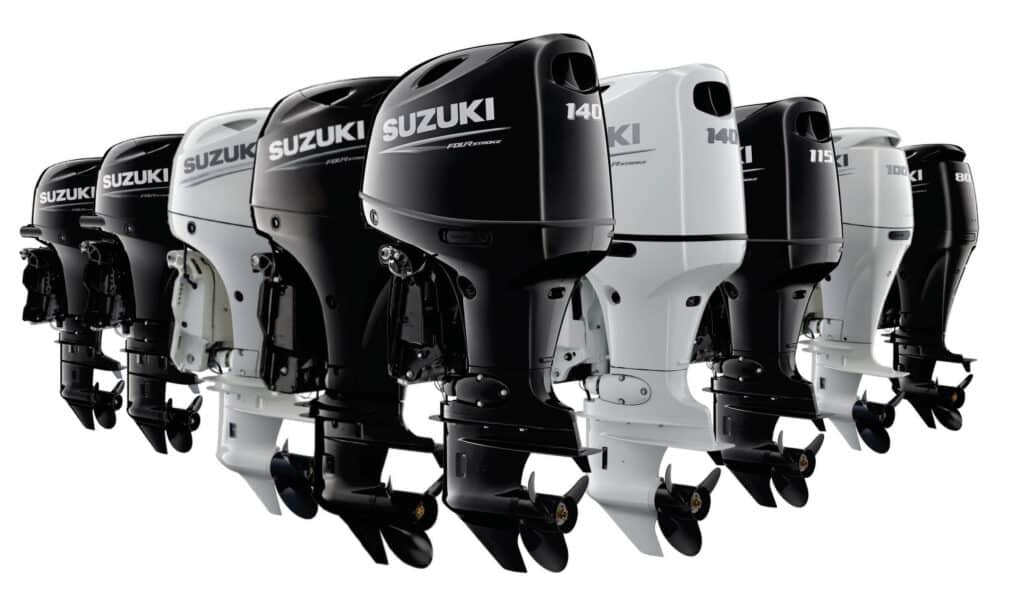
In 2026, the Suzuki 4-Stroke range has become the benchmark for fuel economy, quiet operation, and long-term durability. Unlike older technologies, modern Suzuki 4-strokes utilize Electronic Fuel Injection (EFI) and a Battery-Less starting system in smaller models, providing instant starts even in cold Atlantic mornings.
High-Performance Powerhouses
For serious offshore use, the DF350A and the DF300AP utilize dual-propeller technology and Selective Rotation. This engineering feat converts more rotational energy into forward thrust, which is essential for heavy fishing hulls.
The Versatile Mid-Range
The DF140B and DF115B are current favourites in Montague Gardens. They offer a refined power-to-weight ratio that doesn’t compromise the stability of popular 17-19ft fishing hulls.
2. The Agility of 2-Stroke Engines: When to Go Lightweight
Despite the 4-stroke dominance, the Suzuki 2-Stroke range remains a staple for specific applications. If you prioritize power-to-weight ratios or need a robust, simple mechanical workhorse for remote locations, these engines are unmatched.
- Portable Power: The DT30L and DT15A weigh significantly less than their 4-stroke counterparts, making them ideal for manual launching or inflatable boats.
- Mechanical Simplicity: Models like the DT40W are built for rugged environments where simple maintenance and “on-the-water” repairs might be necessary.
3. The 2026 Economic Breakdown: Is 4-Stroke Cheaper?
With the April 2026 fuel price adjustments in South Africa increasing the cost of petrol, efficiency is no longer a luxury, it’s a necessity.
Fuel Consumption Comparison
On average, a 4-stroke engine consumes up to 30% less fuel than a traditional 2-stroke of the same horsepower. For a recreational boater hitting the water 40 hours a year, the fuel savings alone can pay for the price difference of a 4-stroke within 3-4 years.
Maintenance Cycles
- 4-Stroke: Requires periodic oil and filter changes every 100 hours or once a year. While the service parts cost slightly more, the engine lifespan is significantly longer, often exceeding 3,000 operating hours with proper care.
- 2-Stroke: Avoids oil filter changes but requires the recurring cost of 2-stroke mixing oil. Over a high-use season, this “hidden cost” adds up quickly.
4. Technical Comparison Table: At-A-Glance
| Feature | 4-Stroke (e.g., DF100B) | 2-Stroke (e.g., DT40W) |
|---|---|---|
| Fuel Delivery | Electronic Fuel Injection (EFI) | Carburetor |
| Emissions | Low (Eco-friendly) | Moderate to High |
| Noise Level | Ultra-Quiet | Standard 2-Stroke Growl |
| Shaft Options | S, L, X, XX | S, L |
| Resale Value | Extremely High | Stable for mechanical fans |
5. Application Guide: Matching the Motor to the Boat
Best for Small Inflatables & Yacht Tenders
If you need a motor you can carry by hand, look at the DT15A 2-Stroke. It offers high torque for its 33kg dry weight. If noise and emissions are a concern in marinas, the DF15A 4-Stroke is the premium alternative.
Best for Cape Town Offshore Fishing
For the “run to the point,” you need reliability. The DF200A perfectly balanced for 19-21ft hulls, offering the low-end torque required to climb Atlantic swells safely.
Best for Waterskiing & Leisure
Consistent speed is key for water sports. The DF90A or DF100B provides a smooth power band that helps skiers get out of the “hole” faster without the jerky throttle response of older 2-strokes.
6. Frequently Asked Questions (FAQ)
Q: What is the lifespan of a Suzuki 4-stroke in saltwater?
A: With regular flushing and professional Outboard Motor Servicing, a Suzuki 4-stroke can last between 1,500 and 3,000+ hours. Saltwater corrosion is the biggest enemy, so flushing after every use is mandatory.
Q: Do new Suzuki outboards come pre-filled with oil?
A: No. Suzuki 4-stroke outboards are shipped dry from the factory for safety. You must add the correct 10W-40 Marine Oil before the first start.
Q: Where can I see these prices in person?
A: Visit the Atlantic Suzuki Showroom in Montague Gardens. We have the largest stock of Suzuki outboards in the Western Cape, and our team can provide a custom quote including rigging and Certificate of Fitness compliance.
Summary: The Final Verdict
If you use your boat more than 30 hours a year and value a quiet, clean environment, the 4-Stroke is the only logical engineering choice in 2026. However, for entry-level boaters or those with weight-sensitive hulls, the 2-Stroke remains a powerful, affordable gateway to the water.
Ready to repower? Contact Atlantic Suzuki today to discuss which motor fits your transom and your budget.


